Nestled within the northern part of Seoul, Bukhansan National Park stands as a testament to South Korea's breathtaking natural beauty and rich biodiversity. Covering an area of approximately 79 square kilometers, this mountainous park offers both residents and visitors an escape from the bustling city life, making it a cherished outdoor destination.
Bukhansan, meaning “the mountain beyond the Han River,” is characterized by its dramatic peaks, lush forests, and unique granite formations. The park is home to over 1,300 species of plants and animals, with many being of significant conservation concern. This ecological wealth contributes to the park’s allure, attracting hikers, birdwatchers, and nature enthusiasts alike. Among its diverse flora, one can find ancient trees, colorful wildflowers, and medicinal herbs that enrich the forest ecosystem.
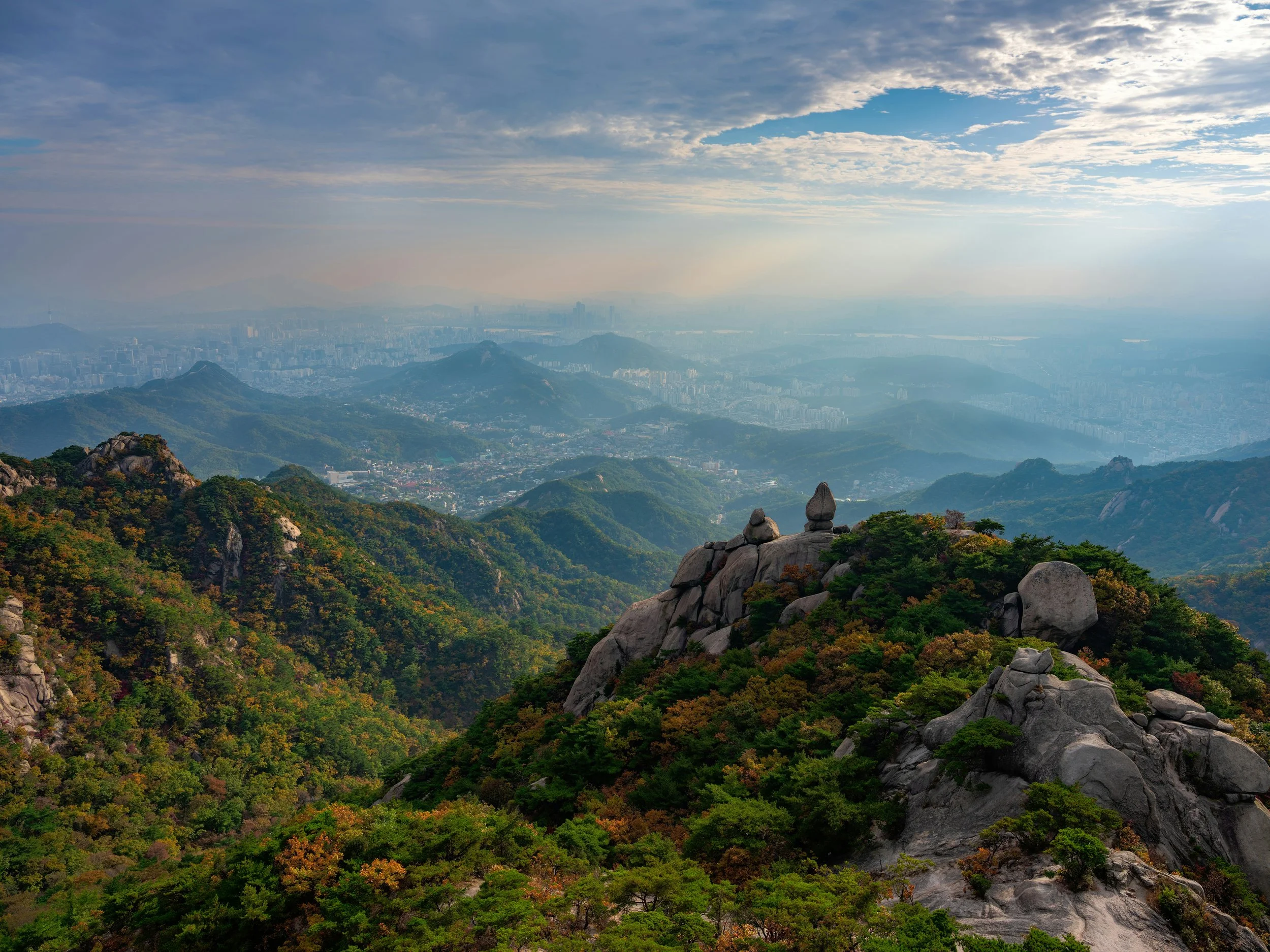
Bukhansan by Elliot Gouy
The landscape of Bukhansan is dominated by its majestic peaks, with Baegundae being the highest at 836.5 meters. The ascent to Baegundae is popular among hikers, offering stunning panoramic views of the surrounding area upon reaching the summit. The trail varies in difficulty; some paths are well-maintained and accessible to those with moderate fitness levels, while others challenge even the most seasoned climbers. Regardless of the chosen route, each hike effectively immerses participants in the tranquil surroundings of nature, providing a welcome respite from urban life.
Hiking in Bukhansan is not merely a physical activity but also a cultural journey. Scattered throughout the park are several historic sites, including ancient temples and fortresses. One notable site is the 15th-century Bukhansanseong Fortress, which served as a defensive structure during the Joseon Dynasty. Visitors can explore its well-preserved walls and gain insight into Korea's historical significance. Additionally, the park houses numerous Buddhist temples, such as Doseonsa and Jeongneungsa, where one can experience peace and spirituality amid the serene environment.
To enhance the visitor experience, Bukhansan National Park offers various facilities, including visitor centers and rest areas. The park authorities place a strong emphasis on conservation and sustainable tourism, implementing measures to protect its natural resources and promoting responsible hiking practices. Furthermore, educational programs and guided tours are available for those seeking to deepen their understanding of the region's ecology and history.
Seasonal changes in Bukhansan add another layer of charm to the park. In spring, cherry blossoms create a picturesque setting, while autumn foliage transforms the landscape into a tapestry of vibrant colors. In winter, snow-covered trails offer a unique charm and serenity, attracting those who enjoy a quieter experience amidst the stark beauty of nature. Each season provides a distinct perspective, ensuring that Bukhansan remains an appealing destination year-round.
Bukhansan National Park serves as a remarkable blend of natural beauty, cultural heritage, and recreational opportunities. As one of South Korea's most treasured national parks, it invites individuals from all walks of life to immerse themselves in the wonders of nature, while also appreciating the rich history that accompanies it. Whether through hiking, exploring cultural landmarks, or simply enjoying the serene atmosphere, Bukhansan continues to be a source of inspiration and rejuvenation for both locals and tourists alike.